We compare stays from booking partners and may earn a commission when you book through our links. Event dates come from the organizers; we flag the ones that aren’t confirmed yet.
Big Bear is Southern California’s snow trip: a lake town at about 6,750 feet, two hours from Los Angeles, with three ski mountains, sledding hills and hundreds of cabins. Big Bear cabin searches peak in December, and the snow itself usually peaks in January and February. Here’s when to go, how the resort works now that it’s three mountains, the road rules that catch first-timers, and where to stay.
When does Big Bear get snow?
Most of Big Bear’s natural snow falls between December and March, and January and February are usually the best bet for snow on the ground in town. Southern California winters swing widely, though: some years bring storm after storm, others are mostly dry with snow only on the ski runs.
That’s why the ski area leans on snowmaking. The resort opens when nights get cold enough to make snow, often in late November. For 2025–26, Bear Mountain opened on November 22, 2025 and Snow Summit the next day. No opening date had been announced for 2026–27 when we checked in late October, so watch the resort’s site. The season usually runs into late March or early April.
- For skiing: any time the resort is open; mid-January through February usually has the most terrain.
- For snow in town and snow play: plan right after a storm. Snow melts fast on sunny south-facing streets.
- For the holidays: Christmas week brings the lights and the crowds; snow on Christmas Day is a bonus, not a given.
The ski resorts: Bear Mountain, Snow Summit and Snow Valley
Big Bear Mountain Resort runs all three mountains, and a lift ticket from one is honored at the others. Snow Valley, near Running Springs, joined in 2023. The Ikon Pass covers all three.
| Mountain | Known for | Where |
|---|---|---|
| Snow Summit | Long groomed runs, families, intermediate skiers | On the south edge of Big Bear Lake, close to the Village |
| Bear Mountain | Terrain parks and freestyle, a younger crowd | Moonridge, on the east side of town |
| Snow Valley | Beginner-friendly terrain, often less crowded | Near Running Springs, about 20 minutes before Big Bear on Highway 18 |
A free shuttle has connected Snow Summit and Bear Mountain in past seasons. Lift ticket prices change by date and are usually lower when bought online ahead of time, so buy before you drive up, especially for weekends and holidays.
Snow play and sledding
“Big Bear snow play” is searched as often as the snow itself, and the rule that matters is simple: use a designated snow play area. Sledding on road shoulders, in turnouts or on private land isn’t allowed, and parking along a snowy highway is dangerous and often ticketed.
- Big Bear Snow Play and the tubing hill at Alpine Slide at Magic Mountain in Big Bear Lake rent tubes and keep their runs groomed. Both have relied on snowmaking in dry spells; check their sites for open days and ticket times.
- Bring waterproof gloves and a change of clothes for kids. Tubing tickets are usually sold by the session, and weekend sessions sell out.
Getting there: roads and chain rules
Big Bear Lake is about 100 miles from downtown Los Angeles, roughly 2 to 2.5 hours without traffic. On a snowy weekend morning it can take twice that, so leave early or come up on a weekday.
- Highway 330 to Highway 18 through Running Springs is the main route from Los Angeles and the Inland Empire.
- Highway 38 from Redlands is longer but often moves better when 330 backs up.
- Highway 18 from Lucerne Valley, the desert side, is the route of choice from the high desert and Las Vegas and often has less snow on the road.
Carry chains from November through April, even with four-wheel drive. Caltrans posts chain controls during and after storms: under R1 and R2, four-wheel and all-wheel drive vehicles with snow tires can usually continue without chains; under R3, every vehicle needs them. Check Caltrans QuickMap or call 1-800-427-7623 before you leave. Highways up the mountain close from time to time after big storms or rockslides.
Where to stay in Big Bear for a snow trip
Most Big Bear stays are cabins and vacation homes rather than hotels. Where you stay decides how much you’ll drive on snowy roads:
- Near the Village and Snow Summit: walk to restaurants and shops, and drive minutes to the lifts. The busiest and usually priciest area.
- Moonridge: closest to Bear Mountain and the Big Bear Alpine Zoo, with lots of cabins on wooded streets.
- Big Bear City: east of the lake, flatter and usually cheaper, 10–15 minutes from the slopes.
- Fawnskin and the north shore: quiet, with lake views; a longer drive around the lake to the ski areas.
What to look for in a winter cabin:
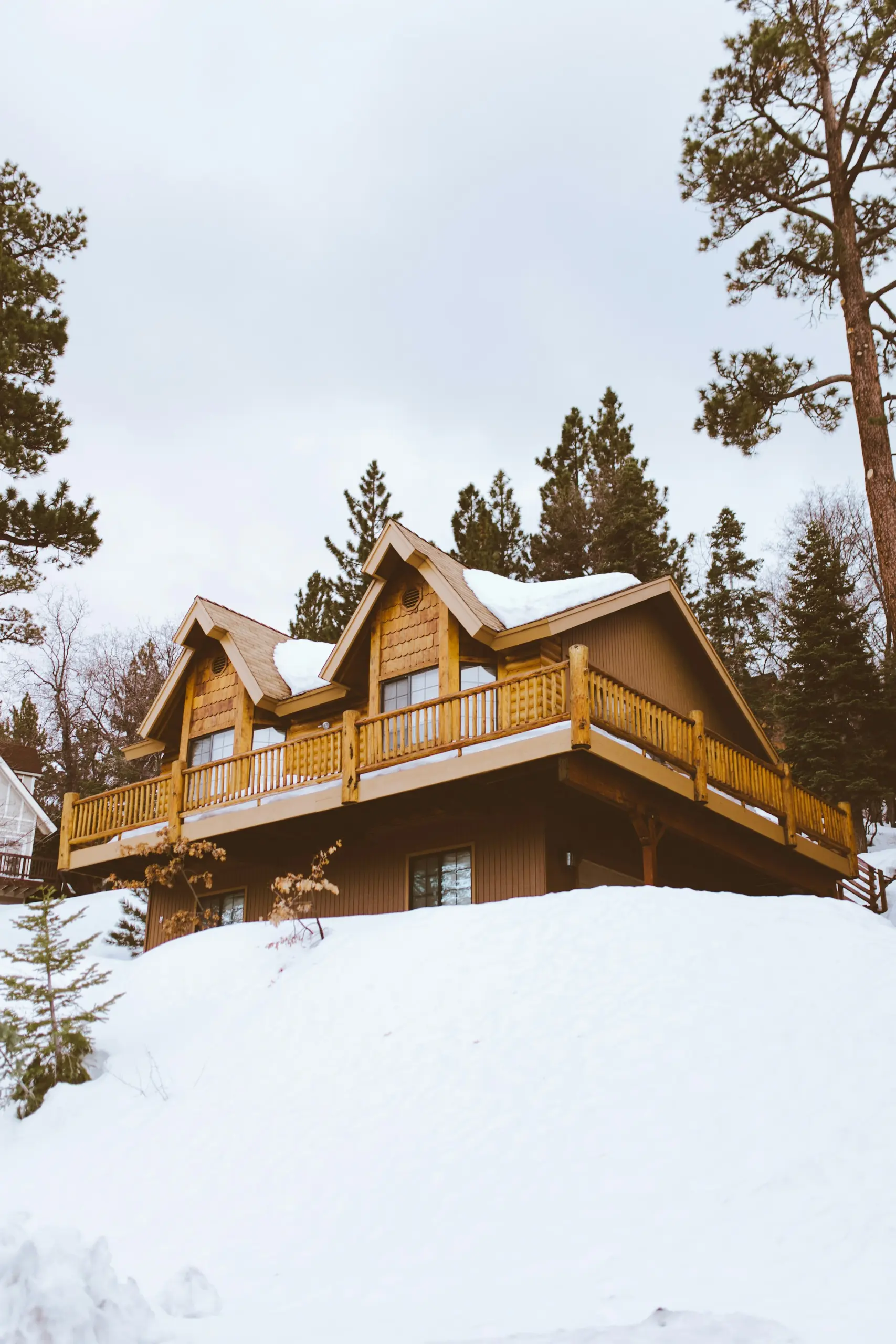
- The driveway. A flat or plowed driveway and on-site parking matter more than a view when it snows. Many listings say whether the road is steep.
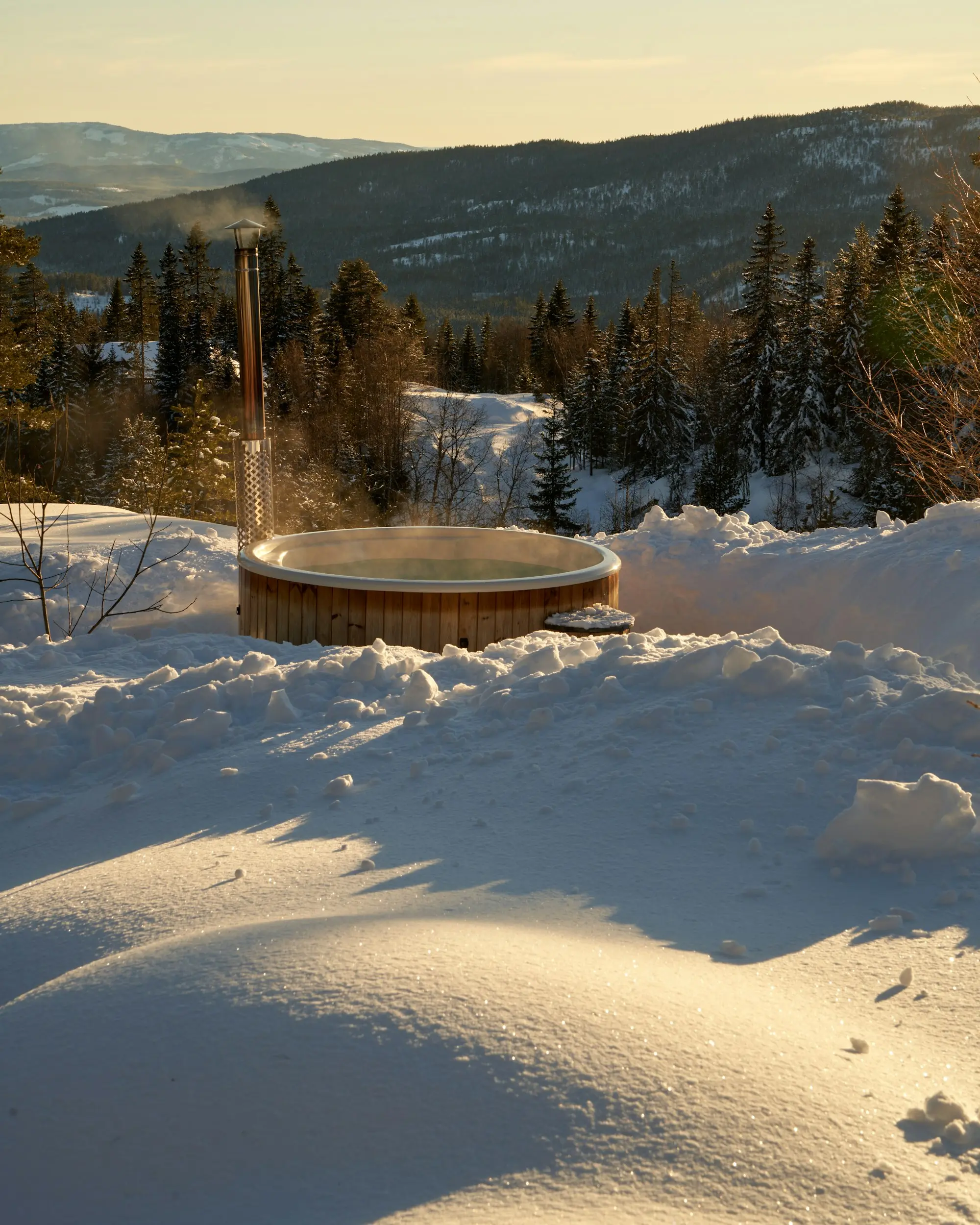
- A hot tub and a fireplace. The two features snow-trip guests ask for most.
- Space for gear. A garage, mudroom or covered deck keeps wet boots and skis out of the living room.
- The minimum stay. Holiday weekends often require two or three nights.
Lake Arrowhead: the quieter alternative
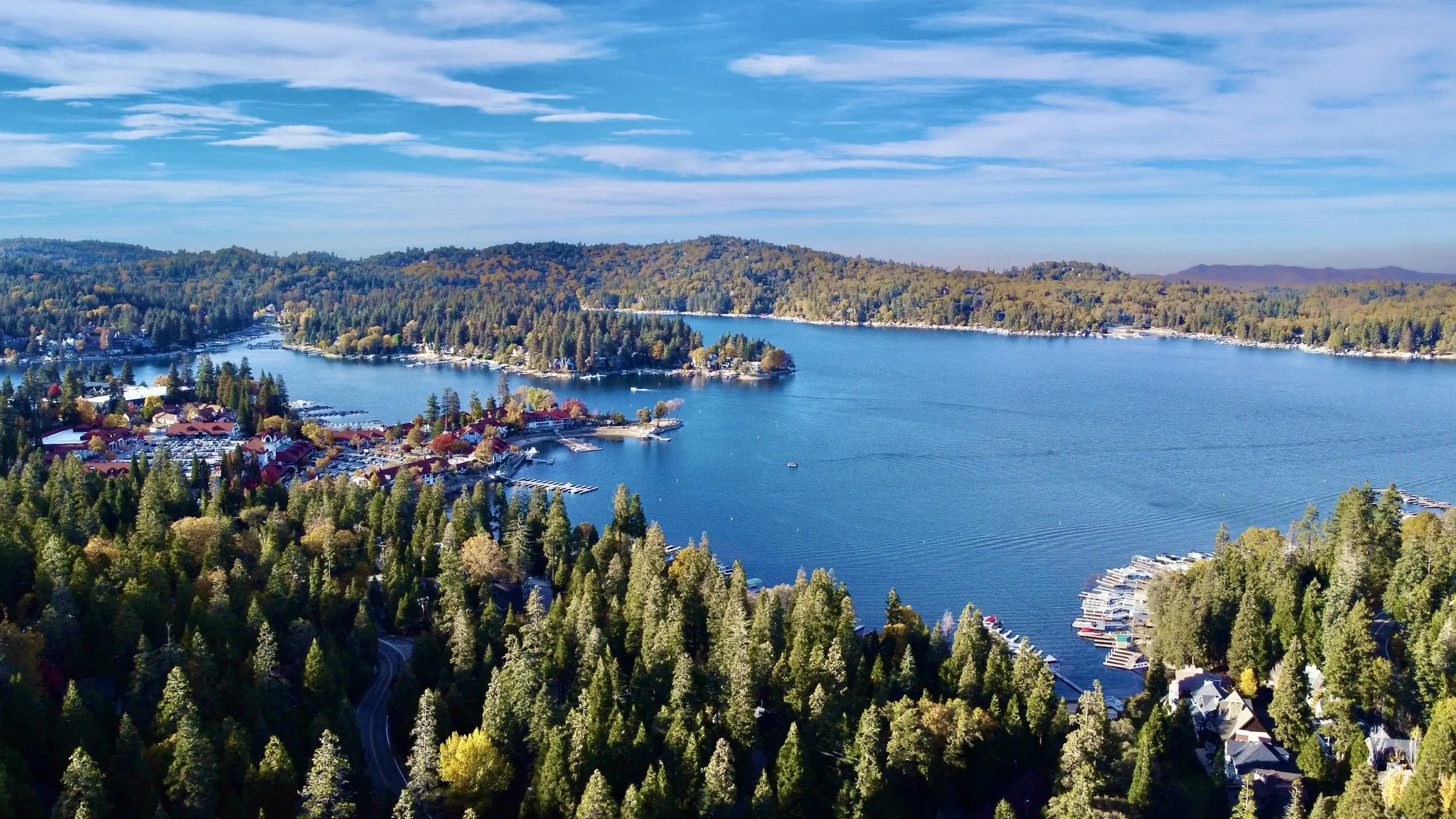
Lake Arrowhead sits about 45 minutes west of Big Bear and closer to Los Angeles. It’s a private lake ringed by pine-shaded homes, with shops and restaurants at Lake Arrowhead Village, but no ski mountain of its own and less reliable snow. It suits a cozy winter weekend; for skiing or guaranteed snow play, Big Bear is the better base, and Snow Valley is about 25 minutes from Lake Arrowhead.